
LISTEN HERE
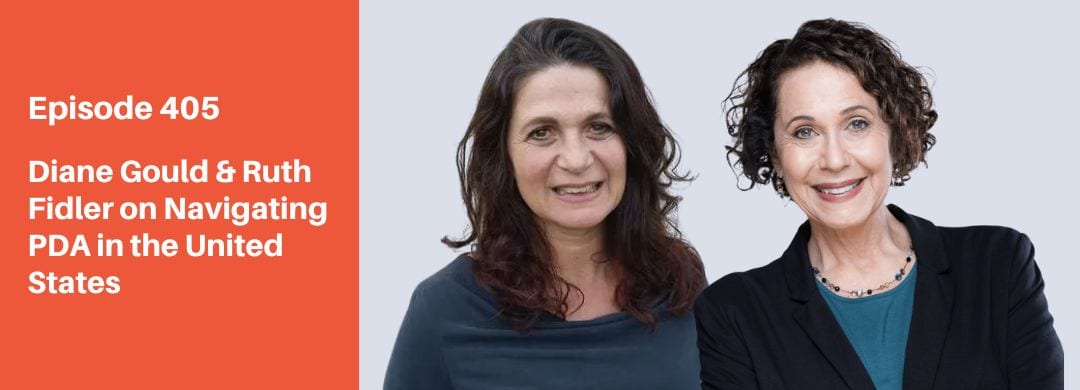
From host Debbie Reber: In today’s conversation, I’m diving into the much-anticipated book Navigating PDA in America with the co-authors and thought leaders in the PDA space, Diane Gould and Ruth Fidler. We’ve touched on PDA in past episodes, but I learned so much from this book, and I’m excited to share it with you because PDA is a diagnosis bringing a lot of clarity and relief to families. As it gains traction in the neurodivergence space, the more we know, the better we can support PDAers in our communities. In this episode, we talk about the nuances of the PDA profile and how to one might determine if the identification fits, where North America stands in understanding PDA in comparison with the rest of the world, the challenges PDA individuals face in school and how they can effectively be addressed, what type of therapy is best for someone with a PDA profile, and much more.
About Diane Gould
 Diane Gould is a Licensed Clinical Social Worker that specializes in serving autistic individuals. As the Executive Director and Founder of PDA North America, she founded the annual PDA North America conference held in Chicago that has changed the lives of hundreds of PDA (pathological demand avoidance/persistent drive for autonomy) families. She co-authored the book Navigating PDA in America with Ruth Fidler which was published in June 2024. In April 2024, Diane was diagnosed as autistic.
Diane has a private practice in the suburbs of Chicago, where she serves neurodivergent children, adults and their families. Over the last 40 plus years, she has worked for both private agencies and school systems. Diane has always been facinated by human behavior and has worked to better understand and support individuals with distressed behavior over the years. She currently focuses her practice on providing consultation and training. She works primarily with parents and regularly attends school meetings with them. Diane loves to train educators and therapists so they can better serve their students and clients. It was the understanding of behavior, autism and the supportive approach in the PDA literature that first drew her to learn more about PDA. And learning about PDA, led her to begin the new PDA movement in North America. Diane formed PDA North America at the first American PDA conference in March 2020. She is making it part of her life’s mission to gain more awareness and understanding of PDA in North America through this non-profit organization.
About Ruth Fidler
 Ruth Fidler is an Education Consultant specializing in complex presentations of autism, Pathological Demand Avoidance (PDA) and emotional well-being. She worked at an all age non-maintained special school for 22 years until 2014 and has worked independently since then. During her time on the senior leadership team the school sustained Ofsted outstanding status. Ruth worked within the school promoting interactive approaches and emotional well- being for pupils with varying autistic profiles. As a member of the leadership team, she had a strategic role and contributed to continuing professional development for all staff. She also led an outreach pilot project working with other agencies to meet the needs of children and
young people currently unable to attend school.
As well as providing training, she regularly observes and monitors teaching and learning, supporting staff to embed and refine good autism and SEND practice. She often presents at local or national events and conferences for parents and for a range of professionals. She provides training and consultancy for a variety of schools and services across the UK. She has contributed to publications in the Good Autism Practice (GAP) journal on the subject of promoting emotional well-being and is co-author of the following books: Understanding Pathological Demand Avoidance Syndrome in Children, Can I Tell You About Pathological Demand Avoidance?, Collaborative Approaches to Learning, Girls and Autism, Being Julia, and Navigating PDA in America.
Things you’ll learn from this episode
- How Diane and Ruth came to share their personal journeys working with neurodivergent individuals and collaborate on the book Navigating PDA in America
- The state of understanding and awareness of PDA in North America in comparison with the UK and Australia
- The factors that distinguish a PDA profile of autism, including using socially strategic ways to avoid demands and more
- Ways schools can better support PDA students, such as adopting flexible approaches, building trust, and recognizing the need for fluctuating capacity and recovery time
- Why traditional therapeutic modalities may be ineffective for PDA individuals, and what is most important for therapy to be successful and positive